Guide
Exercise and menopause: a complete, honest guide
Published
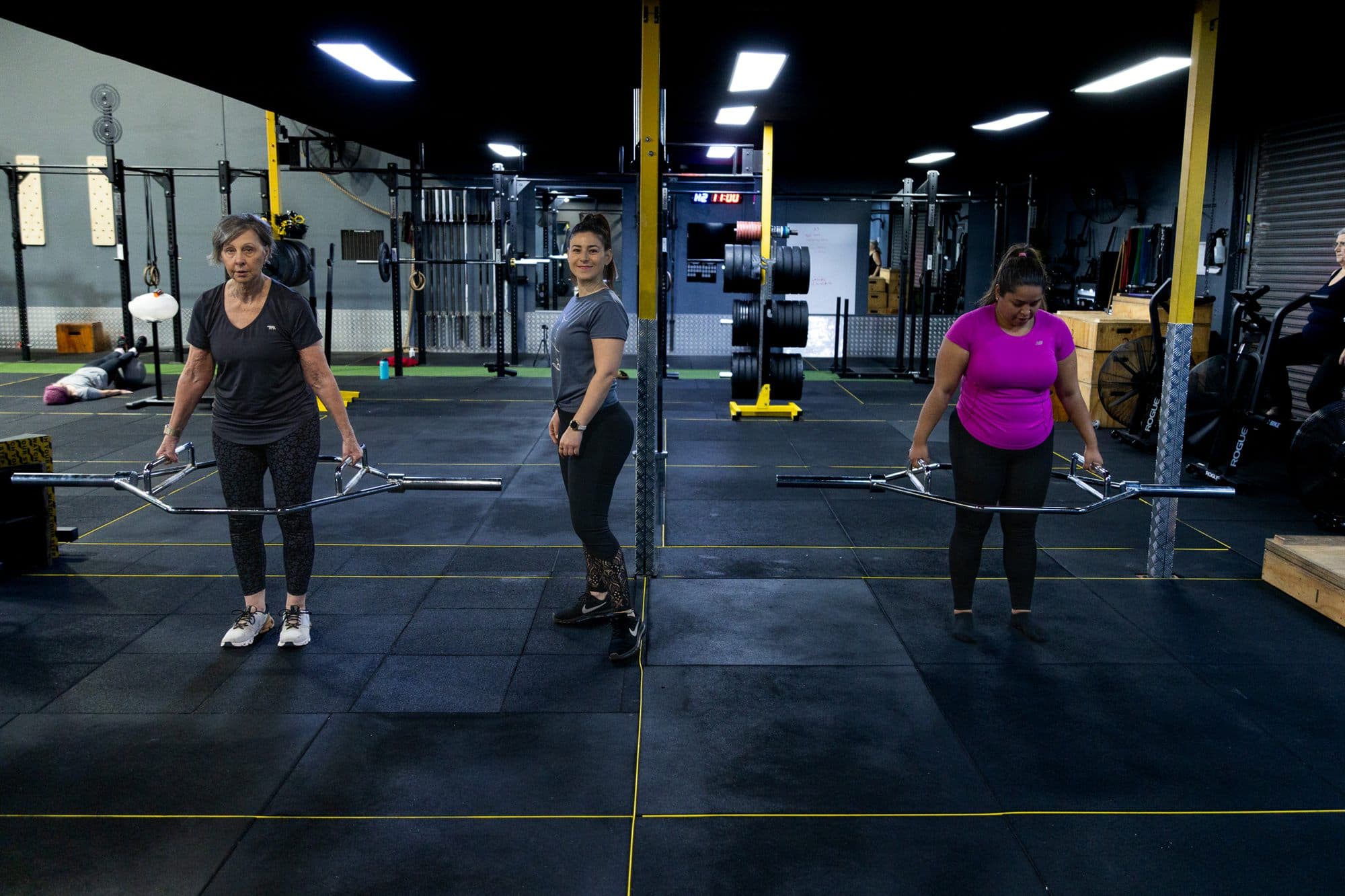
If your body has started behaving differently and nobody has explained why, this is the guide I wish every woman got handed at the start of menopause. It’s honest, it’s based on evidence, and it will not tell you to shrink yourself or chase a number on the scales. The short version: the single most useful thing you can do for your body through menopause is build strength, and it’s rarely too late to start.
I train women through their 40s, 50s and beyond, and the same questions come up again and again. Why has everything changed? Is it too late? Is it safe? What actually works? Let’s go through it properly.
What happens to your body during menopause?
As oestrogen falls through the menopause transition, your body loses muscle and bone more easily, your strength drops, and fat starts to settle around your middle. None of that is a failure of willpower. It’s physiology, and once you understand it, it stops feeling like a mystery you’re losing.
Oestrogen does more than govern your cycle. It helps protect muscle and bone, so when it declines, that protection fades. Muscle mass falls faster than it used to: one review of the research found women lost roughly 2.5% of their muscle through perimenopause and close to 6% by postmenopause, compared with premenopausal women. Bone thins too, because the balance tips toward breaking bone down faster than the body rebuilds it, which is why the risk of osteoporosis climbs after menopause. And fat that once sat around the hips and thighs starts redistributing to the abdomen, even when the number on the scales barely moves.
That last point matters, because it explains something women tell me all the time: my shape has changed even though my weight hasn’t. That’s the redistribution, not a diet you failed to follow.
Here’s the part that should give you hope. Almost everything on that list responds to training. Muscle can be rebuilt, bone can be strengthened, and how you move and feel can improve at any age. The lever is exercise, and one kind matters more than the rest.
Why strength training matters most in menopause
If you only add one thing, make it strength training. It’s the most effective way we know to fight the muscle loss of menopause, it loads and strengthens bone, and the evidence that it’s both safe and effective for women our age is genuinely strong.
Resistance training, meaning lifting weights or working against resistance, is described in the research as the most effective way to combat age-related muscle loss. It’s not cardio, and it’s not a diet. It’s putting a controlled load through your muscles and bones so your body has a reason to rebuild them.
The evidence that this works for older women is better than most people realise. In a landmark Australian trial at Griffith University, 101 postmenopausal women, average age around 65 and many with thinning bones, did supervised strength training twice a week for eight months. They got stronger, their bone density improved, their everyday function improved, and they did it safely. Australia’s own physical activity guidelines back this up: they recommend adults do muscle-strengthening activities on at least two days a week, alongside regular movement.
I go deeper on the safety question in a separate article, because “is it safe to lift at my age” is the worry I hear most and it deserves a full answer. The short version is yes, when it’s built up properly and coached well.
Is it safe to start lifting weights in your 50s?Strength or cardio: which matters more in menopause?
Do both, but if you’re only doing cardio right now, strength is the piece you’re missing. Walking and other cardio are genuinely good for your heart, mood and energy, and I’d never tell you to stop. But cardio alone doesn’t rebuild the muscle and bone that menopause takes, and that’s the exact problem most women my clients’ age are trying to solve.
The pattern I see constantly is a woman who walks every day, does everything “right,” and still feels weaker and stiffer each year. She’s not doing anything wrong. She’s just missing the one ingredient that addresses the muscle and bone side, which is loaded, progressive strength work. Add that to the movement you already do and you cover both bases: a healthy heart and a strong, capable body.
What about perimenopause? Should I wait until menopause to start?
No, earlier is better. Perimenopause, the years leading up to your final period, is when a lot of these changes begin, so it’s the ideal time to build a foundation of strength rather than waiting until more has been lost.
Perimenopause can start in your early-to-mid 40s and last several years. The muscle and bone changes don’t politely wait for menopause proper. So if you’re in your 40s and noticing your energy, strength or shape shifting, that’s not a reason to wait and see. It’s the best possible moment to start, because everything you build now is strength you don’t have to rebuild later.
What about the menopause belly?
The change in where your body stores fat is real, but you can’t target it away with belly workouts, and honestly, that’s the wrong goal anyway. Fat moving to your middle in menopause is driven by falling oestrogen, not by anything you did, and no amount of crunches will spot-reduce it.
Let me be straight about this, because the internet is full of “lose your menopause belly” programs and most of them are selling you a myth. Spot reduction, the idea that you can burn fat from one specific area by exercising that area, doesn’t work. Researchers at the University of Sydney are clear on it: you can’t control where your body loses fat, and studies consistently show targeted exercises don’t preferentially slim the area you’re training. Doing a hundred sit-ups builds the muscle underneath, but it won’t melt the layer on top.
So what does help? The same thing that helps everything else in this guide. Building muscle through strength training raises how much energy your body uses, supports healthier body composition over time, and, more importantly, makes you stronger and more capable regardless of what the mirror shows on a given day. Some change to your midsection through menopause is normal, and it is not a problem you need to fix to be healthy.
This is why I don’t run “lose the menopause belly” programs. Not because I’m judging anyone who wants to feel better in their body, of course you do, but because chasing a flat stomach with the wrong tools sets women up to feel like they’re failing at something that was never going to work. I’d rather build you strong. Feeling capable lasts. A number on the scales doesn’t.
How much exercise do I need, and where do I start?
Aim for strength training on two days a week, some form of movement most days, and work on mobility and balance a few times a week. That’s it. You do not need to live in the gym, and you should start smaller than you think.
Australia’s physical activity guidelines for adults give a clear, doable target: muscle-strengthening activities on two or more days a week, moderate activity like brisk walking on most days, and functional activities for mobility, balance and coordination on three or more days. Two proper strength sessions a week is the foundation, and it’s enough to make a real difference.
If you’re starting from nothing, the biggest mistake is doing too much too soon and scaring yourself off. Two short strength sessions a week, built up gradually, beats an ambitious plan you abandon in a fortnight. The mobility and stiffness side matters just as much for how you feel day to day, and I’ve written separately about the exercises that help most with posture and stiffness.
Better posture and less stiffness after 50And genuinely, if the idea of walking into a gym to do any of this fills you with dread, you’re not alone and there are gentler ways in. That feeling is one of the most common reasons women never start, and it’s completely workable.
What this guide won’t tell you to do
I won’t tell you to crash diet, cut out food groups, punish yourself with exercise, or chase the body you had at 30. That’s the diet-culture playbook, and it fails women over and over, especially through menopause.
Menopause is not a problem to be dieted away. Your body is doing something normal, and the goal isn’t to fight it into submission. The goal is to give it what it actually needs, which is strength, movement, enough protein and rest, and some patience. Slower, kinder, and built to last beats fast and punishing every time, because the fast approaches don’t stick and they leave you feeling worse about yourself than when you started.
If a program is promising to melt your menopause weight fast, or telling you the answer is another restriction, it’s selling the thing that hasn’t worked for you before. You deserve better than that.
How I help women train through menopause
I coach women one on one through exactly this. At Fire & Flow, every session combines strength, the fire, with mobility work, the flow, built around your body, your history and wherever you’re starting from. It’s just you and me, in a small community gym, at your pace.
If any of this sounds like where you are, the first step is a free 15-minute call. No pressure, just a chat about what you want and whether I’m the right fit.
Book your free welcome callFrequently asked questions
Is it too late to start exercising after menopause?
No. The research on older women, including postmenopausal women in their sixties with low bone density, shows they can build strength, bone and function safely. Starting later still brings real benefits.
Do I have to lift heavy weights?
No. You start where your body is and build up gradually. Strength training can begin with body weight and light resistance, and progress from there under guidance. What matters is that the load increases over time as you get stronger.
Will exercise help with my menopause symptoms?
Regular exercise supports energy, mood, sleep and long-term health, which many women feel through the transition. But symptoms vary a lot, and for symptom management specifically, including whether HRT is right for you, that’s a conversation for your GP.
How soon will I notice a difference?
Many women feel more energy and easier everyday movement within a few weeks. Meaningful strength and bone changes build over months of consistent training. It’s steady rather than instant, which is exactly why it lasts.
This is one of a handful of guides answering the questions women ask most often about training after 40. Have a look at all the strength and mobility guides whenever you want to read another.