Guide
Better posture and less stiffness after 50: what actually works
Published
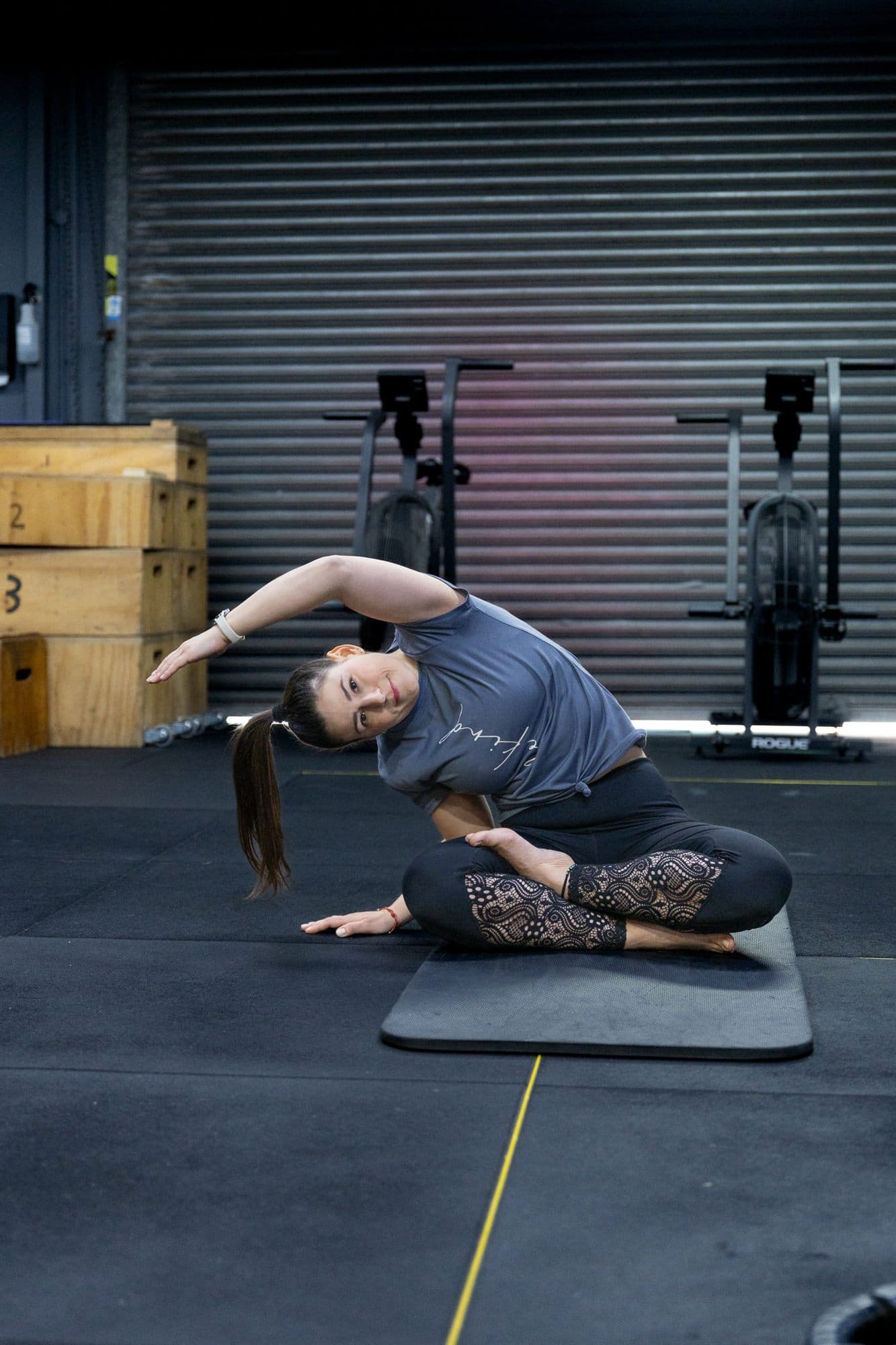
If you’ve noticed yourself rounding forward, feeling stiffer getting out of a chair, or catching your reflection and thinking “when did I start standing like that,” here’s the good news. Posture and stiffness are trainable, not a fixed part of getting older. And the thing most people get wrong is thinking it’s all about stretching. It isn’t. You improve posture by building the strength to hold yourself up, and that changes everything about how you approach it.
I train women through their 40s, 50s and beyond, and this is one of the most common things they want to fix. So let’s go through why it happens and what genuinely helps.
Why do we get stiffer and more hunched as we age?
Mostly, it’s from moving less and losing strength in the muscles that hold you upright, not from age alone. The forward hunch you see in a lot of older adults is closely linked to weakness in the muscles running up the back, and the less we challenge those muscles, the more we drift forward.
A few things stack up over the years. We sit more and move through less of our range, so joints and muscles get used to a smaller, more folded shape. The muscles along the spine that keep you upright get weaker if they’re never asked to work. And through menopause, changes in bone can add to the forward curve. None of it is a moral failing or something you’re stuck with. It’s your body adapting to how it’s been used, which means it can adapt back.
Is it too late to improve your posture after 50?
No, and there’s good Australian evidence for that. In the Griffith University LIFTMOR trial, postmenopausal women who did supervised strength training for eight months actually reduced the forward curve in their upper back and stood taller by the end. If women in their sixties with thinning bones can straighten up with the right training, so can you.
That’s worth sitting with, because so much messaging tells women the hunch is just what happens now. The research says otherwise. Posture responds to training at any age. It’s not about being young or naturally bendy. It’s about giving the right muscles a reason to do their job again.
The best exercises for better posture
The exercises that improve posture are the ones that strengthen the muscles along your upper back and core and open up the front of your body, not endless stretching. In simple terms, you want to strengthen what pulls you upright and mobilise what’s holding you forward.
That usually means a mix of these:
- Strengthening the upper back: rowing movements and back extension work wake up the muscles that hold your shoulders and spine upright. This is the part most posture advice skips, and it’s the most important.
- Opening the chest and front of the shoulders: hours of sitting and reaching forward tighten the front of your body, so gentle chest and shoulder opening helps you sit back into a taller position.
- Freeing up the upper back: thoracic mobility work helps the mid-spine move again instead of staying stuck in a forward curve.
- Loosening the hips: stiff hips pull your posture out of line from below, so hip mobility work matters more than people expect.
- Core strength that supports the spine: this is where Pilates-style work earns its place, teaching the deep muscles that stabilise you to switch on.
You don’t need all of these on day one. A little, done consistently and built up over time, beats a heroic routine you drop after a week.
Why stretching alone won’t fix your posture
Stretching feels good and has its place, but it can’t hold you upright, only strength can do that. Good posture is an active thing your muscles maintain, so if the muscles are weak, no amount of stretching keeps you tall once you stop thinking about it.
This is the piece almost everyone misses. Stretch a tight chest all you like, but if the muscles in your upper back are too weak to pull your shoulders back and keep them there, you’ll drift forward again within minutes. The research bears this out: the strength of those upright-holding back muscles is directly linked to how pronounced the forward hunch is. Weaker muscles, more hunch. Stronger muscles, more upright. So the real fix is building strength, with mobility work alongside it to give you the range to move into a better position in the first place. Strength and mobility together, which is the whole idea behind how I coach.
How to ease everyday stiffness
The best thing for everyday stiffness is regular movement through your full range, not rest. Stiffness feeds on stillness, so the more consistently you move, the more supple and comfortable you tend to feel.
You don’t need a complicated program for this. Australia’s physical activity guidelines actually recommend adults do activities for mobility, balance and coordination on three or more days a week, alongside their strength work, and that’s exactly the sort of movement that keeps stiffness at bay. Gentle daily movement, getting up and moving regularly if you sit a lot, and a bit of dedicated mobility work go a long way. The goal isn’t to become a gymnast. It’s to move through your day without that first-thing-in-the-morning creak following you around.
If your stiffness is sharp, painful, or centred on one joint rather than a general all-over tightness, that’s worth checking with your GP or physio rather than training through.
How I train posture and mobility at Fire & Flow
I build this into every session, because it’s literally half of what Fire and Flow is. The flow, the mobility and movement-quality side, works alongside the strength side so you get both the range to stand tall and the strength to hold it there.
It’s one on one, so everything is pitched at your body and your starting point, whether you’re quite stiff right now or fairly mobile and just want to stay that way. If you’d like to move more freely and stand a bit taller, the first step is a free 15-minute call.
Book your free welcome callFor more on training through this stage of life, my full guide to exercise and menopause covers the bigger picture.
Exercise and menopause: a complete guideFrequently asked questions
Can you fix rounded shoulders and a hunched back after 50?
You can improve them meaningfully. Strengthening the upper back and mobilising the chest and mid-spine reduces the forward rounding over time, and research in older women has shown measurable improvement after several months of strength training.
How long does it take to improve your posture?
Most people notice they can hold themselves more comfortably within a few weeks, while the underlying strength that makes it stick builds over a couple of months of consistent work.
Does sitting all day cause bad posture?
Long periods of sitting encourage a forward, folded shape and let the upright muscles switch off, so breaking up sitting and doing regular strength and mobility work counters it. It’s the inactivity more than the sitting itself.
Is stretching bad for posture?
Not at all, it’s useful for mobility. It just isn’t enough on its own, because holding good posture is a job for strong muscles, not flexible ones.
This is one of a handful of guides answering the questions women ask most often about training after 40. Have a look at all the strength and mobility guides whenever you want to read another.