Guide
Is it safe to start lifting weights in your 50s or 60s?
Published
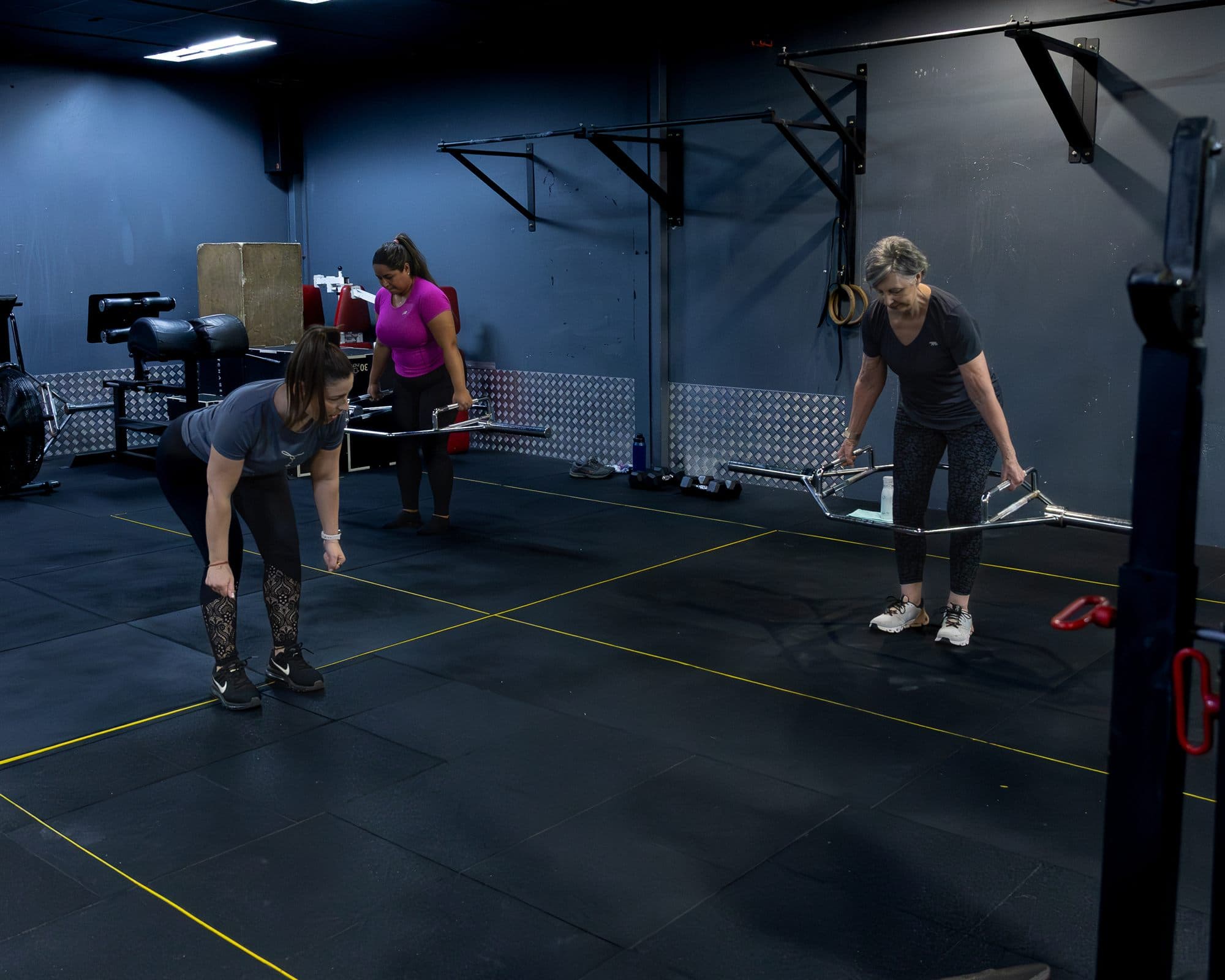
Yes. Lifting weights is safe in your 50s and 60s, and the strongest proof of that is who it’s already been tested on: women older than you, with bones thinner than yours, who trained with real weights and got stronger without getting hurt. The catch, and it’s an important one, is that “safe” depends on it being built up gradually and coached well. Do that, and starting to lift is one of the best and safest things you can do for a midlife body.
This is the worry I hear more than any other, so it deserves a proper, evidence-based answer rather than a reassuring pat on the arm. Here’s what the research actually shows.
The short answer: is lifting safe after 50?
Yes, and this isn’t wishful thinking, it’s the consistent finding of the research on older adults. The peak strength and conditioning body in the field states plainly that a properly designed resistance training program, with good technique instruction, is safe for older adults, including those who are frail or managing health conditions.
The fear usually comes from a picture in our heads: a heavy barbell, a younger body, and the sense that something’s going to snap. But that picture is wrong on the facts. Done properly, strength training is gentler on you than most people imagine, and the risks are smaller than the risks of doing nothing and letting muscle and bone quietly slip away.
What does the research actually say?
Two things stand out. First, an Australian trial showed even women with osteoporosis can lift safely. Second, the broader evidence shows resistance training is remarkably low-risk for older adults across the board.
In the Griffith University LIFTMOR trial, 101 postmenopausal women, average age around 65 and many with thinning bones, did supervised strength training twice a week for eight months. They came out with stronger bones, more strength, better everyday function, a reduced forward hunch, and no fractures. The exact group most people assume is too fragile to lift turned out to be the group the researchers proved could do it safely.
And that fits the wider picture. The National Strength and Conditioning Association’s position statement reviewed the evidence and reported that in a systematic review of resistance training in frail adults aged 70 to 92 and older, there was just one case of shoulder pain across 20 studies and more than 2,500 participants. That is an extraordinarily low injury rate for any form of exercise. Add to that Australia’s own physical activity guidelines, which recommend every adult do muscle-strengthening activity at least twice a week, and the message is clear: this is recommended, not risky.
But isn’t lifting risky if my bones are thinning?
It’s the opposite, done right, lifting is one of the best things you can do for thinning bones. Weight-bearing strength training signals your bones to hold onto and build density, which is exactly what you want if osteoporosis or osteopenia is a concern.
This trips people up because it feels counterintuitive: surely you protect fragile bones by being careful with them? But bones are living tissue that respond to load. Take the load away and they weaken further. Apply sensible, progressive load and they get stronger. The LIFTMOR women had low bone density at the start, that was the whole point of the study, and supervised lifting improved their bone density rather than harming it. If you have diagnosed osteoporosis, you absolutely should be guided by your doctor and coached carefully, but “I have thin bones” is a reason to strength train wisely, not a reason to avoid it.
Where the real risk is, and how to avoid it
The genuine risks come almost entirely from doing too much too soon, poor technique, or no guidance, not from lifting itself. That’s actually reassuring, because every one of those is avoidable.
When injuries do happen to older people who lift, the research points to a clear pattern: they tend to occur in beginners who are unsupervised, combining heavy loads with poor positioning or bad technique. In other words, the problem is rarely the weights. It’s the how. This is exactly why I don’t hand new clients a program and wave them off. Getting the technique right from the start, loading gradually, and having someone watching and adjusting is the difference between strength training being one of the safest things you do and being a way to tweak your back. Start light, learn the movements properly, build up slowly, and the risk drops right off.
What to expect when you start
Expect to start gentler than you think, and to build up over weeks, not to be thrown under a heavy barbell on day one. A good start is about learning how the movements feel and grooving the technique, using light loads or even just your body weight, then adding a little as you get stronger.
The first few weeks are mostly about your body learning the patterns and your confidence catching up. You might feel pleasantly worked afterwards, and a bit of ordinary muscle soreness a day or two later is normal and nothing to worry about. Sharp pain is not, and a good coach adjusts long before you get near that. Progress is steady rather than dramatic, and that’s the point, it’s built to last and built to keep you safe.
When to check with your doctor first
If you have a health condition, take regular medication, or haven’t exercised in a long time, have a chat with your GP before you start. Strength training is safe for the vast majority of people, but a quick check is sensible if any of that applies to you.
This matters particularly if you have uncontrolled high blood pressure, a heart condition, a recent injury or surgery, or diagnosed osteoporosis. None of these necessarily rules out strength training, in fact it’s often recommended, but they’re worth a conversation so your program is built with them in mind. A good trainer will ask about your health history at the start anyway and work with, not around, your doctor’s advice.
How I keep it safe at Fire & Flow
Safety is built into how I coach, not bolted on. I’m accredited through Strength for Life, the Australian program designed specifically for safe, supervised strength training in the over-50s, and every client starts with an assessment of their history and how they move before we lift anything meaningful.
It’s one on one, so I’m right beside you the whole session, watching your technique and adjusting the load to exactly where your body is. Nothing gets rushed, and nothing is one-size-fits-all. If you’ve been wanting to get stronger but the safety worry has held you back, that’s the thing I’m built to solve. The first step is a free 15-minute call.
Book your free welcome callFor the bigger picture on training through this stage, see my full guide to exercise and menopause.
Exercise and menopause: a complete guideFrequently asked questions
Can I lift weights if I have osteoporosis?
Often yes, and it may help, because weight-bearing strength training can improve bone density. Research on postmenopausal women with low bone mass has shown supervised lifting to be both safe and beneficial. If you have diagnosed osteoporosis, work with your doctor and a qualified coach so your program is built for you.
Am I too old to start lifting weights?
Almost certainly not. Studies show even frail adults in their seventies, eighties and beyond can strength train safely and benefit. Starting later still brings real gains in strength, bone and everyday function.
How heavy should I lift as a beginner over 50?
Light enough to learn the movement with good technique, then a little heavier as you get stronger. The load matters far less at the start than getting the technique right and progressing gradually.
Do I need a trainer to lift safely?
Not strictly, but it helps a lot, especially at the start. Most lifting injuries in older beginners come from poor technique or doing too much too soon, which is exactly what good coaching prevents.
This is one of a handful of guides answering the questions women ask most often about training after 40. Have a look at all the strength and mobility guides whenever you want to read another.