Menopause strength training in Perth
Your body is changing. Your training can change with it.
One-on-one Personal Training for women through perimenopause, menopause and beyond, helping you build strength, confidence and keep doing the things that matter to you. At a small, friendly, community-based gym in Osborne Park.
15 minutes on the phone. No pressure. Just a friendly chat to see if we’re the right fit.
What’s actually changing, and the part I can help with
Through our 40s, 50s and beyond, our bodies can start to feel different. Changes in hormones, muscle mass, bone health, sleep, recovery and everyday activity can all play a part, and every woman’s experience of perimenopause and menopause is different.
Muscle mass naturally starts to decline as we age. Research estimates that adults can lose around 3–8% of their muscle mass per decade from around age 30, with the rate of loss increasing later in life. Menopause can also contribute to changes in muscle mass and bone health.
That might sound a little confronting, but it’s also one of the reasons strength training becomes so valuable as we age.
Regular strength training can help you maintain and build muscle, support bone health and continue doing the things you want your body to do, now and as you age. Australian health guidance specifically includes strength training as part of exercise through menopause to help build bone and muscle.
And this is where I come in. I’m not here to treat your hormones or manage your menopause symptoms. That’s for your healthcare team. My role is to help you get stronger, move well and feel more confident in what your body can do.
You’ve probably heard some of this before
You’ve probably heard that strength training becomes increasingly important through perimenopause, menopause and beyond. Building and maintaining muscle, supporting your bones and staying strong as you age. There’s a lot of information out there about why it matters.
But knowing strength training is important and knowing how to actually start are two very different things.
What does strength training look like for you, with the body you have today? What if your knee is a little cranky, your back needs some extra care, you haven’t lifted weights before, or you simply don’t know where to begin?
That’s the part I can help with.
We start where you are, work with your body and gradually build your strength and confidence from there. You don’t need to be ready to “lift heavy” before you start. Getting stronger is the process.
Exercise and menopause: a complete, honest guideMy role is to help you get stronger
Menopause can come with a lot of changes, and a lot of information about what you should be doing.
My role isn’t to diagnose your symptoms or treat your hormones. I’m here to help you build strength, move well and feel confident in what your body can do.
Weight or body composition might be something that matters to you, but it doesn’t have to be the focus. For me, progress is also about your Life & Health Wins and being able to keep doing the things that matter to you.
For anything clinical, including menopause symptoms, HRT or bone density results, that’s for your GP or appropriate healthcare professional. Where needed, I’m always happy to work alongside them.
What the training actually looks like
We start with what your body can do comfortably today, not what you could do at 35, and gradually progress your training as you get stronger. Strength is a big part of what we do, alongside mobility and movement based on what your body needs.
What you’ll notice
Progress isn’t only about what you see on the scales or how much weight you can lift.
Sometimes, it’s getting up from the floor a little more easily. Carrying all the shopping in one trip. Feeling steadier on your feet. Moving with more confidence. Or simply noticing that something that used to feel hard… doesn’t anymore.
These are what I call your Life & Health Wins, the moments outside the gym that remind you why you’re getting stronger in the first place.
And over time, one of those wins might simply be trusting your body and feeling more confident in what it can do.
What training with me looks like
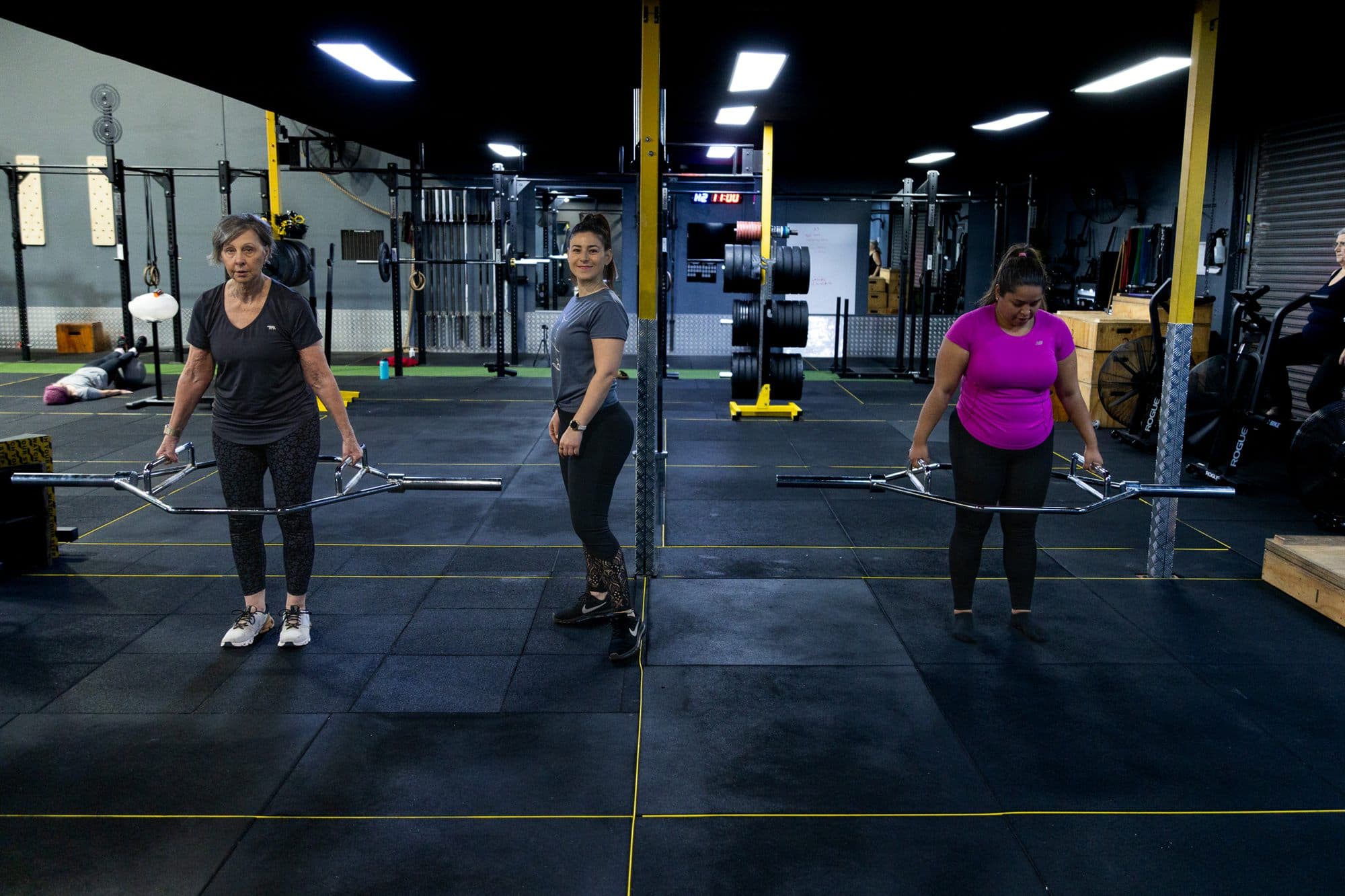
Your Personal Training sessions are 45 minutes, one-on-one at PrimeFit in Osborne Park, a small, friendly, community-based gym.
We check in with how you’re feeling and how your body is moving that day. Your training is personalised to you, and we can adapt when we need to while continuing to build your strength over time.
Before we start training together, we’ll have an Initial PT & Movement Assessment. This gives us time to chat about your exercise history, what’s important to you and anything we need to be mindful of. We’ll also go through some simple movements so I can see how your body moves and where we’re starting from.
You don’t need to arrive with a certain level of fitness or knowing what exercises to do. That’s my job.
Personal Training for women in Perth, based in Osborne Park
I train out of PrimeFit on Hutton Street in Osborne Park, a small, friendly, community-based gym. It’s an easy drive from Karrinyup, Stirling, Woodlands, Innaloo, Doubleview, Noranda, Dianella and the surrounding northern suburbs.
I work with women through their 40s, 50s and beyond, including women navigating perimenopause, menopause and postmenopause. If you’ve been looking for strength training through menopause in Perth, my approach is about helping you build strength, move with confidence and continue doing the things that matter to you, without making weight loss the centre of everything.
I hold Certificate III and IV in Fitness and I’m a Strength for Life Tier 2 Instructor through COTA WA. I’ve also completed Matwork Pilates training with Studio Pilates International, my 350-hour Hatha Vinyasa Yoga Teacher Training with The Yoga Space in Perth, as well as Yoga Nidra and Restorative Yoga Teacher Training with Wisdom Yoga Institute.
Where to start
A free 15-minute Welcome Call.
You can tell me a little about yourself, what you’re looking for and any questions or concerns you might have.
I’ll talk you through how I work, and we can see whether we’re the right fit for each other.
No pressure. Just a friendly chat about you and what you need.
Questions women ask me
Will exercise help with my menopause symptoms?
Exercise can support your health and wellbeing through perimenopause, menopause and beyond, including your muscle and bone health. But every woman’s experience of menopause is different, and exercise isn’t a treatment for every symptom. If you need support managing your symptoms or want to discuss HRT, that’s a conversation for your GP or appropriate healthcare professional.
Is it too late if I’m already through menopause?
Absolutely not. It’s never too late to start getting stronger. Strength training can be especially valuable after menopause for maintaining and building muscle, supporting bone health and helping you stay strong as you age. We simply start where your body is today and build from there.
Do I have to lift heavy?
Not straight away. We start where your body is today and build gradually. It’s not about the number on the weight. It’s about finding the right resistance for you and progressively increasing it as you get stronger. What feels “heavy” is different for everyone.
I’ve been told I have low bone density. Can I still train?
Often, yes. The right type of exercise can be an important part of supporting bone health, but your training needs to be appropriate for you. If you’ve been diagnosed with low bone density or osteoporosis, I’m happy to work alongside your GP, physiotherapist or exercise physiologist so we can make sure your training supports what you need.
I’m on HRT, or thinking about it. Does that change anything?
HRT is something to discuss with your GP or menopause healthcare professional. My role is to help you build strength, move well and feel confident in what your body can do. If there’s anything your healthcare team would like us to consider with your training, we can work with that.
Is this about losing weight?
No. Weight loss doesn’t have to be the focus of your training. If weight or body composition is something that matters to you, we can talk about it, but progress is about so much more than the scales. Getting stronger, supporting your bones, moving with confidence and noticing your Life & Health Wins all matter too.
I’m exhausted. How am I supposed to train when I’ve got nothing left?
You don’t have to arrive feeling 100% every time. We check in with how you’re feeling and work with what you have that day. Sometimes that means progressing, and sometimes it means adapting. Both are part of the process.
Wherever you’re starting from, there’s a way forward that works for you.
The five starting points