Guide
Is Pilates enough after 40? An honest answer
Published
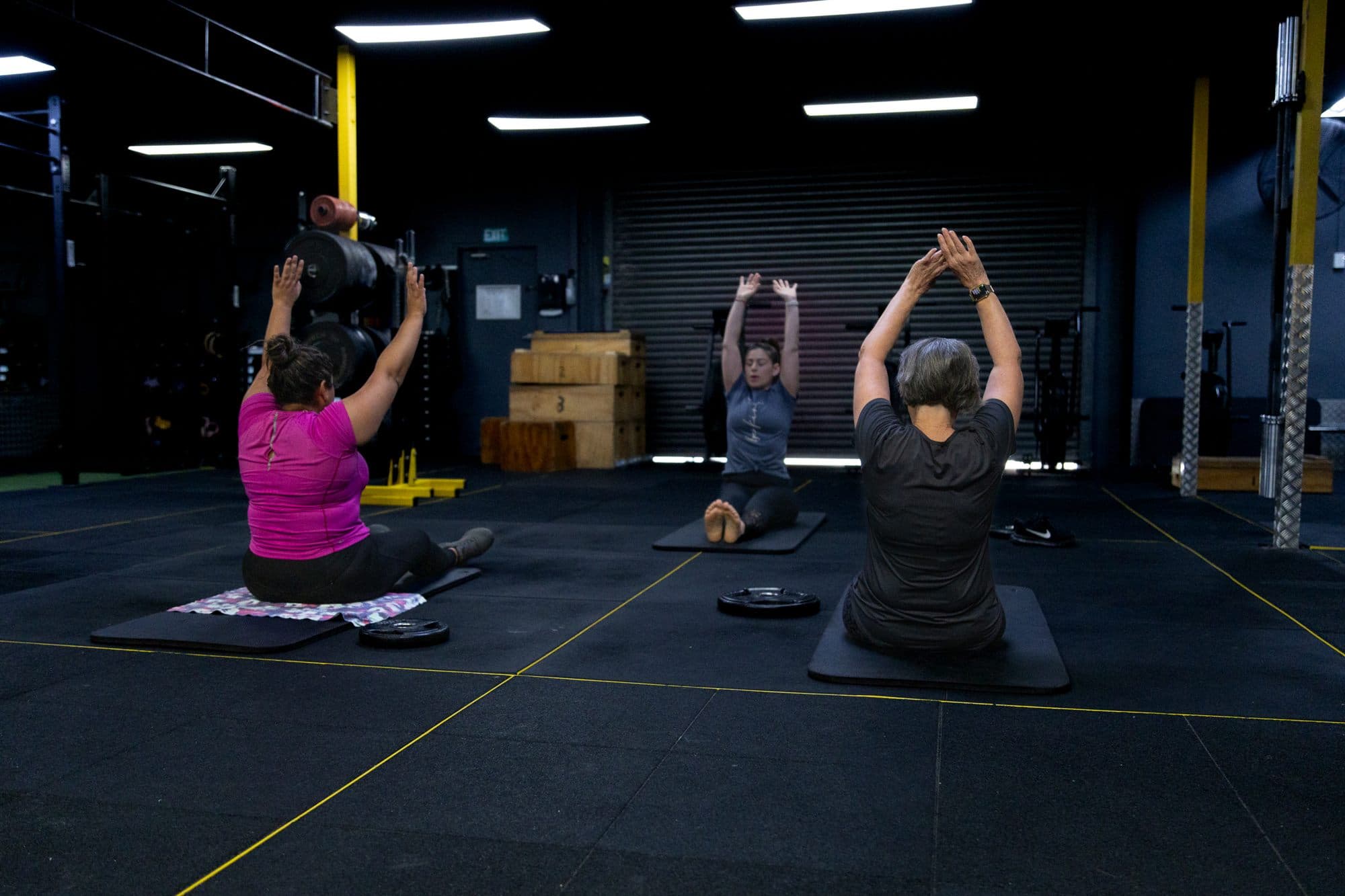
Here’s the short answer: Pilates is genuinely good for you. It can help build strength, control, balance, mobility and body awareness, and there are so many things I love about it.
But as we move through our 40s, 50s and beyond, it’s also important that our muscles and bones are challenged progressively. Depending on the type of Pilates you’re doing and how it’s programmed, Pilates alone may not always provide enough progressive resistance to support all of your strength and bone health needs.
That doesn’t mean you have to choose one or the other. For most women, Pilates and strength training can work really well together.
I’m qualified in Matwork Pilates, so this definitely isn’t me talking Pilates down. I love it, and I bring elements of it into my own training and coaching. It’s simply about understanding what Pilates can offer, what strength training can offer, and how the two can complement each other.
What Pilates is genuinely brilliant at
Pilates has so many benefits, and there are good reasons why so many women enjoy it and feel better for doing it.
- Control and coordination: Pilates encourages you to move with intention and control, helping you become more aware of how your body moves.
- Core strength and stability: Pilates includes plenty of work for the muscles around your trunk, hips and pelvis, which can help support strength, stability and everyday movement.
- Mobility: Pilates takes your body through a variety of movements and ranges of motion, which can help you maintain mobility and feel more comfortable moving.
- Balance and body awareness: Pilates can challenge your balance, coordination and awareness of where your body is in space, all things that continue to matter as we age.
- Low-impact movement: Pilates gives you a way to challenge your body without high-impact exercise, and exercises can often be adapted to suit different bodies and abilities.
If you’ve been doing Pilates for years and you love it, keep doing it. You don’t need to give up something that makes your body feel good. Strength training can simply be another piece of the puzzle.
So where does strength training come in?
This is where progressive resistance becomes important.
Our bodies adapt to what we ask them to do. To continue building strength, we gradually need to increase the challenge over time. That might mean increasing the resistance or weight, changing the exercise, or progressing the way a movement is performed.
Pilates can absolutely challenge your muscles, and it can be progressed in different ways. But depending on the type of Pilates you’re doing and how it’s programmed, it may not provide enough progressive resistance on its own to support all of your muscle strength and bone health needs as you age.
That’s where strength training can complement it.
Maintaining and building muscle becomes increasingly important through our 40s, 50s, 60s and beyond. Our bones also respond to appropriate loading, which is another reason resistance training becomes such a valuable part of looking after our bodies as we age.
There’s some encouraging research here too. The Australian LIFTMOR trial from Griffith University looked at postmenopausal women with low bone mass, with an average age of around 65. After eight months of supervised high-intensity resistance and impact training twice a week, the women in the training group improved measures of bone density, strength and physical function compared with the control group.
That doesn’t mean everyone needs to start lifting heavy weights. It shows us that getting older doesn’t mean we have to stop challenging our bodies. We simply need to start where we are and build progressively.
Is Pilates a waste of time after 40, then?
Not at all. If you enjoy Pilates and it helps you feel good in your body, there’s absolutely no reason to stop.
The question isn’t whether Pilates is good for you. It’s whether it gives your body everything it needs as you move through your 40s, 50s and beyond. For many women, adding progressive strength training alongside Pilates can help support muscle strength and bone health while still keeping all the things they love about their Pilates practice.
And I think this part really matters: if Pilates is something you genuinely enjoy and turn up to every week, that consistency is incredibly valuable.
The best kind of movement is the kind that works for you and your life. We can build around what you already enjoy rather than taking it away.
What “enough” actually depends on
Enough for what? That’s really the question underneath the question.
If you enjoy Pilates because it helps you move more comfortably, feel more connected to your body and maintain your mobility, it may already be giving you a lot of what you’re looking for.
But if your goals also include building strength, supporting your bone health and staying strong for the things you want to keep doing as you age, carrying your shopping, getting up from the floor, travelling, gardening or keeping up with the people you love, then adding progressive resistance training can be really valuable.
It’s not about Pilates being “enough” or “not enough.” It’s about what you want your body to be able to do, and choosing the types of movement that support that.
How I’d combine the two
There isn’t one perfect combination of Pilates and strength training that works for everyone. It depends on your goals, what you enjoy, how often you can realistically train and what else you’re doing during your week.
If you love Pilates, keep it in. Then look at where strength training could fit alongside it. For many women, two strength sessions a week can be a great place to start, with Pilates, yoga, walking or other movement fitting around that in a way that works for their life.
And if strength training is the part that feels intimidating, you’re definitely not alone. You don’t need to know how to use all the equipment or feel confident in a gym before you start. That confidence can build over time.
How to get over gym anxietyAnd one more thing: starting strength training doesn’t mean starting heavy.
We start where your body is today, find the right level of resistance for you and gradually build from there. As you become stronger and more confident, we can increase the challenge.
Strength isn’t something you need to prove. It’s something we progressively build.
Strength and softness, in the same session
Strength with softness is an important part of how I coach.
For me, getting stronger doesn’t mean pushing your body harder every single time. It also means paying attention to how you’re feeling, how your body is moving and what you need that day.
Your Personal Training sessions are built around you. Strength is an important part of what we do, while mobility, balance, flexibility and other types of movement can be included where they support you and your goals.
If you already love Pilates, you don’t have to give it up to start strength training. We can look at how the two can work together in a way that fits your body, your goals and your life.
If you’ve been wondering what strength training could look like alongside your Pilates, we can start with a free 15-minute Welcome Call. Tell me a little about where you’re at, I’ll explain how I work, and we can see whether we’re the right fit for each other.
No pressure. Just a friendly chat.
Book your free 15-minute callIf you’d like to explore a little more, I’ve put together a few guides that might help. If you’re unsure about adding weights, you can read more about starting strength training in your 50s. If mobility, posture and stiffness are more on your mind, there’s a guide for that too. And if you’re navigating perimenopause, menopause or beyond, my complete menopause guide looks at the bigger picture.
Frequently asked questions
Is Pilates enough on its own after 40?
It depends on what you want from your training. Pilates can help with strength, control, balance, mobility and body awareness. But if your goals also include continuing to build strength and supporting your bone health as you age, adding progressive resistance training can be really valuable. For many women, it doesn’t have to be Pilates or strength training. The two can work really well together.
Is Pilates or strength training better for bone density?
When it comes specifically to supporting bone health, progressive resistance training has strong evidence behind it, particularly when the resistance is gradually increased over time. Pilates can still have an important place in your week, with benefits for strength, balance, control and mobility. Again, you don’t necessarily have to choose one or the other.
Is reformer Pilates the same as strength training?
Reformer Pilates is a form of resistance exercise, and it can absolutely challenge your muscles. Whether it provides the same kind of progressive resistance as a structured strength-training program depends on how the sessions are programmed, the exercises being used and how the resistance is progressed over time. They don’t need to replace one another. Reformer Pilates and strength training can offer different benefits and work really well alongside each other.
Can I do Pilates and weights in the same week?
Absolutely. Pilates and strength training can complement each other really well. How you combine them depends on your goals, what you enjoy, how often you can realistically train and what else you have going on in your week. For many women, two strength sessions a week can be a great starting point, with Pilates and other movement fitting around that in a way that works for their life.
I’ve got a sore knee. Is Pilates the safer option?
Not necessarily. What feels appropriate will depend on why your knee is sore and how it responds to different movements. Pilates may feel comfortable for some people, while appropriately adapted strength training may also be useful. You don’t necessarily need to stop strengthening your legs because your knee is sore. Sometimes we simply need to change the exercise, resistance, range of movement or setup. If your knee pain is new, worsening, swollen, or you’re unsure what’s appropriate, it’s worth speaking with your GP or physio rather than trying to push through it.
About Fire & Flow Movement
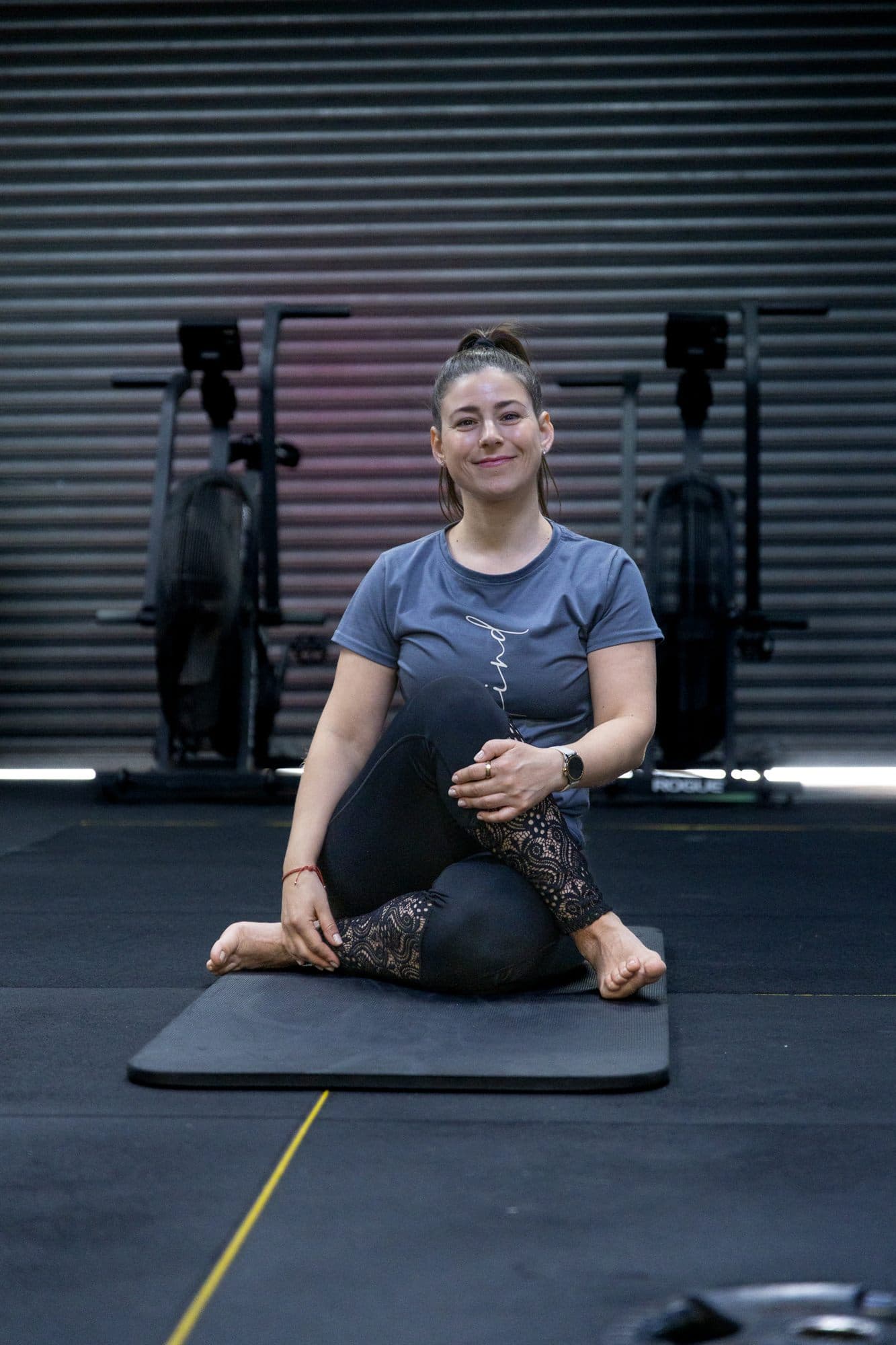
Fire & Flow Movement is run by Alex Henriques, a qualified Personal Trainer with Certificate III and IV in Fitness and a Strength for Life Tier 2 Instructor. Alex works with women in their 40s, 50s, 60s and beyond, helping them build strength and confidence through one-on-one Personal Training at PrimeFit in Osborne Park, Perth.
More about AlexThis is one of a handful of guides answering some of the questions women ask most often about training after 40. You can explore all the strength, movement and wellbeing guides here